Your Business Doesn’t Have a People Problem. It Has a Pattern Problem.
Here’s a belief that quietly strangles business growth: “No one else can make these decisions the way I can.”
It feels true. It feels earned. After years of building something from nothing, making thousands of judgment calls, and solving problems no one else even saw coming — that belief feels like wisdom.
It’s not wisdom. It’s a structural trap.
And it’s not your fault for being in it. But it is your responsibility to get out.
What Owner Dependency Actually Looks Like
Most owners don’t recognize owner dependency as a structural problem. They experience it as a staffing problem, a loyalty problem, or a “finding good people” problem.
Research backs this up: studies on founder-led companies consistently show that 60% of founders remain heavily involved in their business’s daily operations even years after it’s fully established. B And the pattern has a name — a founder bottleneck — but most owners don’t see it forming until it’s already expensive.
Here’s what it actually looks like in practice:
- Your team asks you questions they should be able to answer themselves
- Projects stall waiting for your approval — even small ones
- Two team members handle the same situation differently, and both were “using their judgment”
- You can’t take a real vacation without your phone
- Growth has plateaued — not because the market isn’t there, but because you are the ceiling
Sound familiar? You’re not running a business anymore. You’re running a decision queue. And the line is getting longer.
“Most small businesses don’t plateau because of market demand — they plateau because the founder becomes the bottleneck,” according to business growth experts. The fix, they note, isn’t working more — it’s restructuring how decisions flow through the organization.
The Real Problem Has Nothing to Do With Your Team
Here’s the reframe that changes everything:
Your team cannot replicate what they cannot see.
The decisions you make every day — on pricing, on clients, on risk, on hiring, on how to handle an unusual situation — feel like instinct to you. But they’re not. They’re pattern recognition built from hundreds or thousands of repeated choices over years of experience.
Management researchers Ikujiro Nonaka and Hirotaka Takeuchi called this tacit knowledge — knowledge that lives in experience but has never been written down, mapped, or transferred. In their landmark research, they demonstrated that the most successful organizations are the ones that figure out how to convert tacit knowledge into explicit, transferable systems. The same principle applies directly to founder-led businesses.
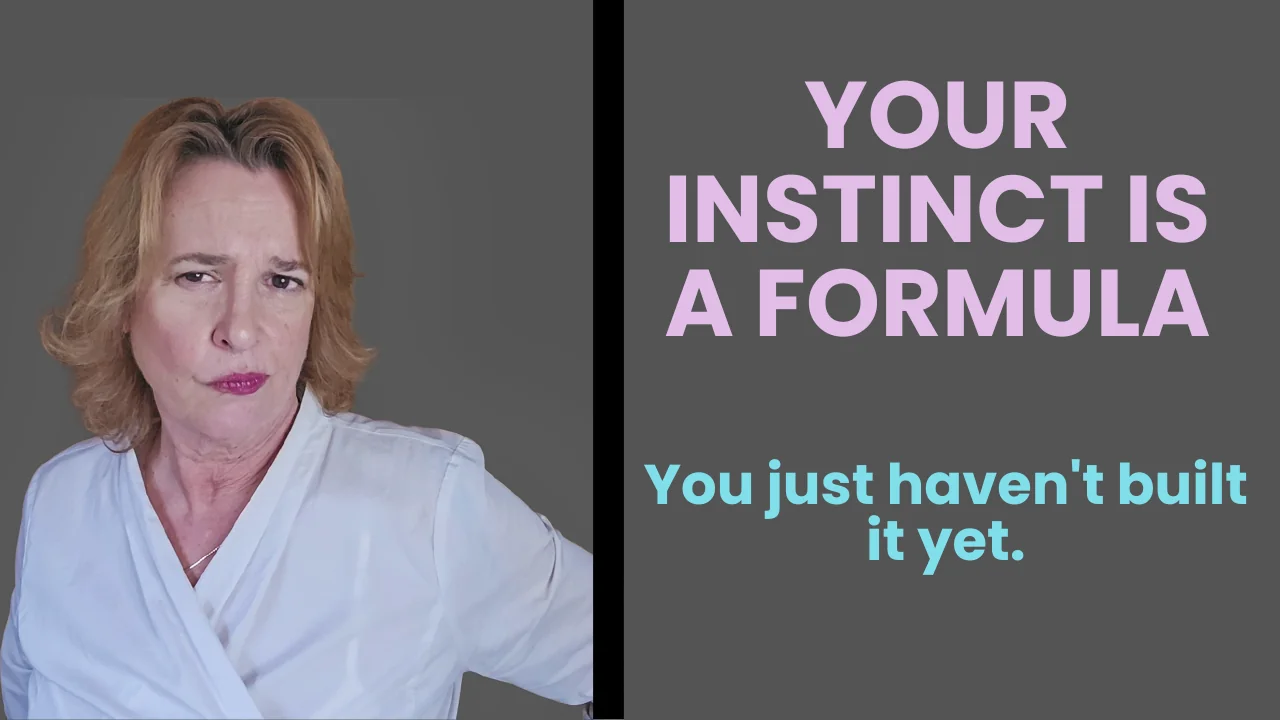
Your instincts are actually a system. You just haven’t built it yet.
This is the structural truth behind owner dependency: it’s not that your team lacks capability. It’s that your decision logic was never externalized into something they could actually use.
The moment that pattern is observed, mapped, and documented — it becomes transferable. That’s the turning point for scaling leadership.
How Owner Dependency Gets Wired Into the Business
Understanding why this happens helps us solve it structurally — not just symptomatically.
Founders solve early problems personally. In the early stages, speed matters more than structure. You handled sales, resolved client issues, built processes, and made every financial call. The business grew around your decision style — and stayed there. What starts as a “hub-and-spoke” structure — where the founder is the hub and each team member is a spoke — becomes the operating model of the entire company. It’s efficient at five employees. It breaks at twenty-five.
Teams learn to escalate upward. Over time, your team unconsciously learned something: the safest move is to ask the owner. It wasn’t a bad choice on their part. You usually had the right answer. But what started as efficiency became a cultural pattern — decisions move up, autonomy decreases, your workload multiplies. Routine operational decisions such as pricing approvals, hiring filters, and client escalations frequently remain centralized with the founder long after the company has grown beyond the startup phase.
Founders misinterpret their own speed. You make decisions quickly because you recognize patterns. But pattern recognition feels like gut instinct. So most founders assume: “No one else could do this.” Yet when I walk a client through their decision-making step by step, a clear, logical framework almost always emerges. The instinct was a process all along.
Systemizing feels slower than just doing it. Documenting your thinking takes time you don’t have — so you answer the question instead of building the system. Except the question comes back tomorrow. And the day after. According to Intuit’s 2024 Business Solutions Report, 51% of small business owners say they’re struggling to streamline operations to enable growth — yet most are still solving the problem by working harder rather than building smarter.
There’s also an identity layer. Many founders derive real meaning from being the problem-solver, the one everyone needs. Letting go of decision authority can feel like losing relevance. That’s a human response — and it’s worth naming honestly. But identity built on indispensability is a cage, not a crown. If you want to delegate without losing control, the first step is recognizing that your value isn’t in the answer — it’s in building the system that produces the answer.
A Story Worth Sitting With
I worked with the owner of a move management company who had built a successful business over more than fifteen years. Estimating was their superpower — walk into a home, talk with the client, give a number, and be right.
When I asked them to teach it, they said: “I can’t. I just know.”
So instead of asking them to teach it, I asked them to think out loud.
We walked through a real project together — how they evaluated scope, calculated materials, estimated labor hours, factored in risk, and adjusted for the client relationship. Question by question, decision by question.
What emerged wasn’t instinct. It was a system — a repeatable, logical framework they had been running in their head for fifteen years without realizing it.
We built it into a spreadsheet. They didn’t believe it would work. “Try it and see,” I said. Their project manager uses it now to do the estimates. And what the owner said was: “My instinct was actually a formula.”
That’s what happens when you externalize your thinking. The business gets smarter — and you get your time back.
This is exactly what Nonaka and Takeuchi documented decades ago in their research on knowledge-creating companies: the most powerful competitive advantage any organization has is the ability to take what lives in individual experience and make it organizational knowledge. The founders who figure this out stop being the system — and start building one.
Three Structural Moves That Break Owner Dependency
This is not a mindset problem you solve with a shift in perspective. It’s a structural problem that requires structural solutions. The RAD Business Success Method™ is built around exactly this kind of structural diagnosis — because growth problems are almost always structural problems wearing a people costume.
- Map the decisions you make on autopilot.
Start with the decisions you make most frequently. Not the big strategic calls — the daily ones. What do you approve? What do you redirect? What do you fix after someone else tried? These are the patterns hiding in plain sight. AI tools can accelerate this mapping process dramatically — a structured conversation can help you surface and articulate decision logic you didn’t even know you had. If you’re not sure where to start, AI Essentials for Business Owners™ is specifically designed to help established owners apply AI to exactly this kind of structural work. - Convert pattern into protocol.
Once you’ve identified the decision logic, convert it into something your team can use: a decision tree, a checklist, a threshold framework, a short SOP. This doesn’t require months of documentation. It requires focused extraction. If you want a deeper dive on building SOPs your team will actually use, we’ve written on exactly that. - Install decision authority at the right level.
Documented systems are only half the solution. The other half is permission. Your team needs clear authority levels — what they can decide independently, what requires a flag, what requires your input. Strategic decisions should remain with the founder, while operational decisions must move to team leaders. South Shore Times Without this structural clarity, systems sit unused because the cultural pattern of escalation hasn’t been replaced with a structural one.
The Business That Runs Without You Doesn’t Run Itself
There’s a myth floating around entrepreneurial circles that the goal is a business that runs completely on autopilot — that you become optional.
That’s not the goal.
The goal is a business where your judgment is embedded in the structure — so the business operates at your level of quality without requiring your constant presence. As we explore in How Structurally Mature Businesses Operate Differently, the companies that scale are the ones that engineer their growth rather than chase it.
You built something worth scaling. The question is whether that something lives in your head or in the architecture of the company.
If it’s still in your head, the business isn’t scaling. You are.
And there’s a ceiling on that — your time, your energy, your bandwidth. The ceiling imposed by owner dependency appears first as slowed decision velocity and later as opportunity cost that no leader can afford. Deals slip, projects stall, and the culture learns to wait for permission rather than take informed action.
The owners who break through that ceiling aren’t the ones who work harder. They’re the ones who stopped being the system and started building one.
Is Your Business Structurally Independent?
The first step is knowing where you stand.
The Structural Independence Assessment™ is designed to help business owners identify exactly where the business still depends on them — and which dependencies carry the highest cost to growth. It takes ten minutes and gives you a clear score across four structural dimensions, your primary growth constraint, and a personalized next step.
→ Take the Structural Independence Assessment™
Not ready for the full assessment? Book a Strategy Session and let’s look at it together.
Frequently Asked Questions